

The short answer
Catering kitchen rental is booking licensed commercial kitchen space by the hour or the month rather than leasing your own. In March 2026 Canada’s Competition Bureau urged governments to remove regulatory barriers around shared kitchens and food hubs, arguing these spaces let food entrepreneurs avoid the six-figure build-out costs of constructing a commercial kitchen of their own.
- What happened On 19 March 2026 the Competition Bureau published a report on shared kitchens and food hubs.
- Three recommendations Harmonise food safety and licensing rules, standardise inspection for shared facilities, and use them as regulatory testbeds.
- Not a change in the law It is advice to policymakers. Nothing about your licensing obligations changed on the day it was published.
- Why caterers Event-driven work rarely justifies a fixed lease, which is the cost problem these spaces exist to solve.
- What to do now Check storage, loading access, off-hours availability and the contract before you book.
For caterers, that report is worth reading, because it names the exact friction you run into when you try to rent space: rules that differ between one municipality and the next, and inspection expectations that shift depending on who is asking. Here is what the Bureau actually said, what it does and does not change, and what to look for in a rental kitchen in the meantime.
What did Canada's Competition Bureau say about shared kitchens?

On 19 March 2026 the Bureau released a report on shared kitchens and food hubs, titled “A recipe for competition”. Its core observation is straightforward: these spaces provide shared infrastructure that lowers the high start-up and fixed costs a food business would otherwise carry alone — but Canada's mix of municipal, provincial and federal rules creates challenges for the spaces and the businesses using them. The findings came out of research and consultations with regulators, industry experts, food hub operators and other market participants.
The Bureau made three recommendations. First, harmonize food safety and licensing rules across jurisdictions, to cut duplication and give small businesses clarity on operating across regions. Second, clarify compliance expectations and standardize inspection procedures for shared food production facilities, so that several businesses working out of one building are not each interpreting the rules differently. Third, use shared facilities as testbeds for regulatory innovation — letting regulators pilot new rules and compliance tools, gather practical evidence, and improve food safety frameworks based on what actually happens on the floor.
Acting Commissioner of Competition Jeanne Pratt said shared kitchens and food hubs “can help open the market to small producers, including new players”, and encouraged policymakers to take the recommendations into consideration.
8,800+
food and beverage processing firms with employees in Canada
Competition Bureau of Canada, “A recipe for competition”, March 2026
Source~92%
of them are small businesses
Competition Bureau of Canada, “A recipe for competition”, March 2026
SourceReporting the release, The Canadian Press noted that these facilities usually come equipped and licensed by local health authorities, serving businesses such as meal-kit providers, caterers and pop-up restaurants — and that regulatory hurdles discourage multi-region operation, confining businesses to local markets. The March recommendations still stand, and the Bureau has since gone wider: on 16 June 2026 it opened an examination of competition across Canada’s food supply chain, from production through to retail pricing, with a report due in spring 2027. The policy direction behind shared kitchens is still being written.
Why does this matter for caterers specifically?
Catering demand is event-driven and lumpy. A wedding season, a run of corporate lunches, and then three quiet weeks. That shape fits a rented kitchen far better than a lease, because you are buying capacity on the days you actually need it rather than paying rent through the gaps. It is precisely the pattern the Bureau describes when it talks about lowering fixed costs for small producers.
The regulatory friction bites hardest when you grow past one city. The Bureau’s recommendation to harmonise food safety and licensing rules across municipal, provincial and federal jurisdictions rests on exactly that: requirements can vary even within a single province. Crossing a provincial border changes the picture again. The CFIA is clear that you do not need a Safe Food for Canadians licence to trade food within your province or to prepare food that will be sold or consumed there — but you do need one to import, to export, or to prepare food that will be sent to a different province.
For a caterer, that is the difference between taking a contract two provinces over and turning it down. None of it changed in March. What changed is that the country's competition watchdog has now put on record that the duplication is a barrier worth removing — which is the sort of thing that shifts policy slowly, and gives you something to point at in the meantime.
What should you look for in a catering kitchen for rent?
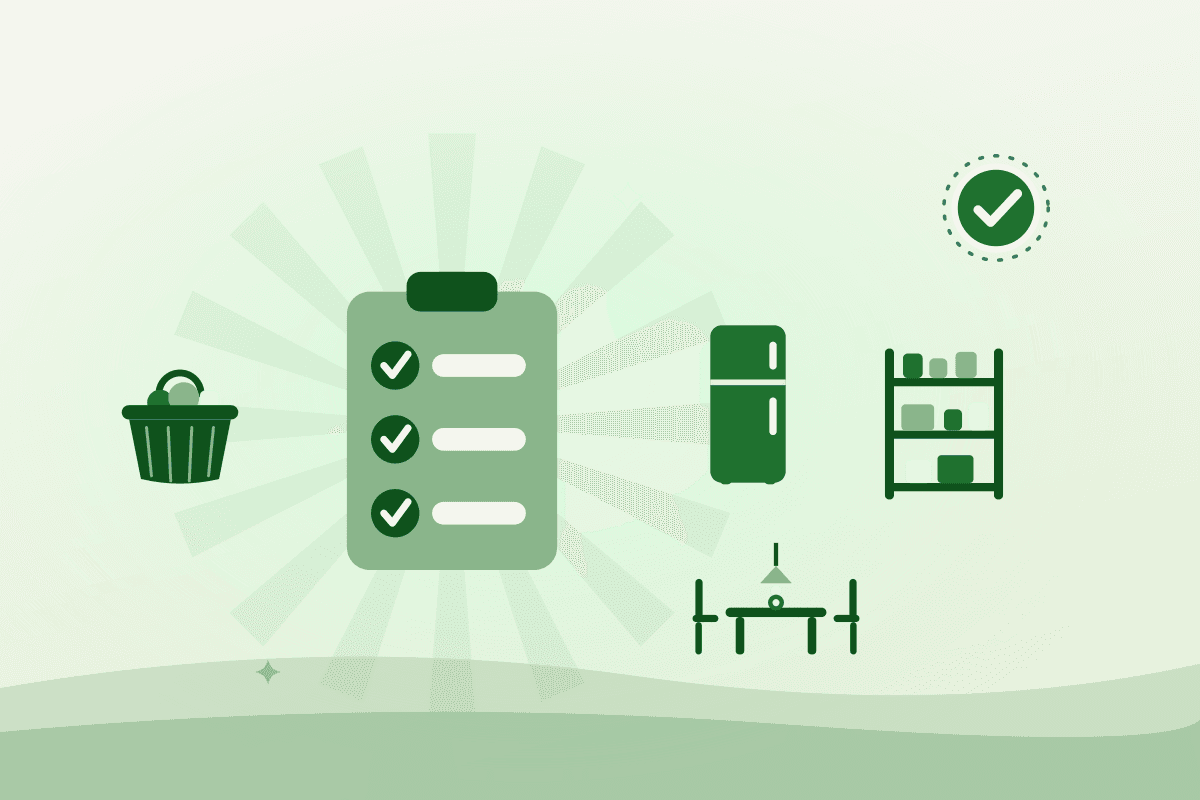
Catering puts demands on a kitchen that ordinary production does not. The work compresses into a narrow window, then everything has to leave the building at once. So when you weigh up a catering kitchen for rent, how the space behaves on an event morning matters more than its equipment list. Use this as a walkthrough checklist.
| What to check | Why it matters for catering | What to ask the operator |
|---|---|---|
| Event-day prep capacity | Your work compresses into one morning, not a spread-out week | How many renters are booked in my slot, and how much bench and burner space is actually mine? |
| Cold storage | Prepped trays and proteins must hold at temperature between prep and service | Is refrigerated space included, how much, and can I hold it overnight before an event? |
| Dry storage | Disposables, linens and equipment need somewhere to live between jobs | Is there lockable dry storage, and is it billed separately from kitchen time? |
| Loading access | Full hotel pans and chafers have to move out quickly and safely | Is there a loading door near the kitchen, and parking during load-out? |
| Off-hours availability | Events run evenings and weekends; prep often starts before dawn | Can I book outside your trading hours, and does the rate change? |
How does catering kitchen rental compare to a fixed commissary lease?
The honest answer is that it depends on how many hours you genuinely use. Hourly, on-demand booking turns kitchen access into a variable cost: you pay for event weeks and pay nothing through the quiet ones, which suits a calendar that swings. A fixed commissary membership costs the same in August as in December, but it buys certainty — a slot that is reliably yours, usually with storage attached, and often a permitted base of operations if you also run a truck.
The crossover point is arithmetic, not opinion. Take your real booked hours over the last three months — not your optimistic ones — and price them both ways. Food Web's pricing is published openly, and the rental kitchen revenue calculator will turn a rate and an hour pattern into a monthly figure you can hold against a membership quote. Whichever way you go, read the deposit and cancellation terms first — in catering, a client cancelling late is a normal event, and you need to know whether that cost lands on you.
The wider set of options — hourly booking, commissary memberships, off-hours sublets and leases — is compared in the complete guide to commercial kitchen rental. If your catering doubles as a base of operations for a truck or a market stall, the commissary kitchen rental guide covers that. Both sit alongside the rest of the kitchen rental guides hub.
Frequently asked questions
- What did the Competition Bureau actually recommend?
- Three things: harmonize food safety and licensing rules across jurisdictions so small businesses have clarity operating across regions; clarify compliance expectations and standardize inspection procedures for shared food production facilities; and use those facilities as testbeds for regulatory innovation, letting regulators pilot new rules on operational evidence.
- Is this a change in the law?
- No. The Bureau made recommendations to policymakers; it does not itself change food safety, licensing or zoning rules. Your obligations are what they were before 19 March 2026, and change only if the responsible governments act. Treat the report as direction, not permission.
- How do I find catering kitchen space near me?
- Search a platform that lists licensed kitchens with real availability, and widen the search past dedicated commissaries. Restaurants with dark days, cafés that close mid-afternoon, community halls and church kitchens all hold permits and sit idle for much of the week.
- What should a catering kitchen rental contract include?
- The booked hours and how far ahead you can reserve them; exactly which equipment you are entitled to use; how much cold and dry storage is included and whether it is billed separately; the deposit amount and cancellation terms on both sides; insurance requirements, including whether you must name the host; and the cleaning standard expected at the end of a shift, with any deductions spelled out.
- Do I still need my own licence if the kitchen is already licensed?
- In most cases yes. The operator's permit covers the premises; it does not extend to your business or your menu. You will usually need your own food business licence or registration, and selling into another province brings the federal Safe Food for Canadians Regulations into play. Confirm with your local health authority before your first event.
Book the hours your calendar actually needs
The regulatory picture may take years to simplify. The kitchens, though, already exist. Browse licensed kitchens to see what is available near you, or start with renting a kitchen on Food Web to compare spaces on the hours you actually need. Create a free account to message hosts, save the spaces that fit, and book your first event slot.
Sources
- A recipe for competition: how shared kitchens and food hubs can help small food businesses — Competition Bureau Canada, Mar 19, 2026
- Competition Bureau calls to take down regulatory barriers around shared kitchens and food hubs — Competition Bureau Canada, Mar 19, 2026
- Shared kitchens, food hubs can reduce barriers for startups: Competition Bureau — The Canadian Press via CP24, Mar 19, 2026
- Obtain a Safe Food for Canadians licence — Canadian Food Inspection Agency
- Competition Bureau to examine competition across Canada’s food supply chain — Competition Bureau Canada, Jun 16, 2026
- Behind the price tag: an examination of the food supply chain — Competition Bureau Canada, Jun 16, 2026

Written by
Anna Purna
AI-assisted research and city guides, reviewed by the Food Web team
AI-assisted author, reviewed by the Food Web team.
Anna Purna is Food Web's AI writing assistant — an avatar named after Annapurna, the Hindu goddess of food, agriculture, and nourishment. The name is about abundance, not a person on staff. She drafts research-backed guides; a human editor reviews them before they go live.
Next step
Find a licensed kitchen and skip most of this cost
Licensed kitchens listed with real rates and real availability. Listing is free for owners; renters pay only for the time they book.
No listing fees · 12% on completed bookings · Refunds inside the notice window