


The short answer
The Guelph Farmers' Market runs Saturdays year-round, 8 a.m. to 1 p.m., at 2 Gordon Street — the corner of Wilson and Gordon Streets in downtown Guelph. The City calls it a community cornerstone in Guelph since 1827, and food vendors selling there need approval from Wellington-Dufferin-Guelph Public Health first.
- Saturdays, all fifty-two of them 8 a.m. to 1 p.m. at 2 Gordon Street. The market does not run into the afternoon.
- A community cornerstone since 1827 The City of Guelph's own wording. Several Ontario markets claim comparable dates, so nobody should be calling any of them the country's oldest.
- Vendors need approval first Wellington-Dufferin-Guelph Public Health reviews farmers' market food vendors, and mobile food premises carry their own permit.
- One market among 180-plus Farmers' Markets Ontario, established in 1991, represents more than 180 farmers' markets across the province.
- The step after a stall is a kitchen Vendors who outgrow home production need licensed kitchen time, not a bigger table.
180+
farmers' markets represented by Farmers' Markets Ontario
Farmers' Markets Ontario's own membership figure; the association was established in 1991.
Source4,137
farms selling through farmers' markets
Statistics Canada, 2020 data — fewer than the 15,647 farms selling from on-site stands, so markets are not the largest direct channel.
SourceIt is the farmers market Guelph shoppers plan their Saturday mornings around. This guide covers where and when it runs, what the health unit expects of the people selling food there, how the market sits inside Guelph's wider local food network, and what a vendor usually needs next once a stall stops being enough.
Where and when is the Guelph Farmers' Market?

The City of Guelph lists the market at 2 Gordon Street, at the corner of Wilson and Gordon Streets in the heart of downtown, open Saturdays year-round, 8 a.m. to 1 p.m., and describes it as a community cornerstone in Guelph since 1827. Those Guelph farmers market hours are the detail worth committing to memory, because the market does not extend into the afternoon — by one o'clock the stalls are packing down. Confirm the current schedule on the City of Guelph's market page before a first visit, since holiday weekends and special events can shift things.
A note on that date, because it comes up in every argument about Ontario markets: Ottawa's ByWard Market claims 1827 as well, its own market authority says so while most secondary sources say 1826, and no primary source settles which market in Canada is oldest. Guelph's 1827 is the City's own claim about Guelph. Leave it there.
Year-round matters more than it sounds. A summer-only market is a seasonal outing; a market that opens all fifty-two Saturdays is infrastructure. It gives growers a predictable weekly sales channel through the winter, and it gives shoppers a habit rather than an event. If you are only used to visiting in August, the winter market is a genuinely different experience — fewer stalls, more storage crops, baking and preserves, and considerably more room to talk to the person who grew what you are buying.
Downtown placement also does real work. The market is walkable from the downtown core rather than stranded in a suburban lot, which means a Saturday visit folds into everything else happening downtown that morning. Parking downtown fills quickly on market mornings — check the City of Guelph's current downtown parking information before you drive in, and arrive closer to eight than to noon if you want the full selection.
What food vendors are regulated by Wellington-Dufferin-Guelph Public Health?
Shoppers rarely think about this, and vendors cannot avoid it. Food vendors at farmers' markets in this region fall under Wellington-Dufferin-Guelph Public Health, which reviews and inspects vendors who serve or sell food to the public. The health unit publishes a Farmers' Market Food Vendor Application Form that vendors complete ahead of selling, and market organizers are expected to notify Public Health in advance of a market opening. Timelines and forms change — confirm the current requirements with WDG Public Health directly rather than relying on what a neighbouring vendor did last season.
That local arrangement is the Ontario pattern rather than a Guelph quirk. Food premises in Ontario are inspected by local public health units rather than by the province directly, which is why the answer to “who do I ask?” changes when you cross a regional boundary.
There is a second track for anyone arriving on wheels. A truck, trailer or cart that prepares food on site is a mobile food premises and carries its own permit requirement, separate from a stall application. If your plan is to bake at home, sell at a stall, and eventually park a trailer at events, that is three different conversations with the health unit rather than one.
The practical takeaway for a would-be vendor is that the permit conversation belongs at the start of your planning, not the week before your first Saturday. Approval is a prerequisite for a stand, not a formality collected afterwards, and the answer often shapes what you are allowed to sell and where you are allowed to make it.
Beyond the market — what does Guelph's local food landscape look like?
A market is the visible tip of a food system. The rest of it — the farms, the small producers, the specialty retailers — is harder to see because nobody publishes it on one page. Food Web's Asset Map exists to fix exactly that. In Guelph, grocers make up most of what has been mapped so far, with farms, producers and other categories behind them.
Food Web map
Guelph Farmers Markets
That balance is the interesting part. Grocers hold a clear majority, which means a substantial minority of mapped Guelph food businesses are farms, producers or other categories entirely — not a scene where the chains have swallowed everything, and not a scene that lives or dies on one Saturday market either. For a shopper, it means the market is a starting point rather than the whole answer. For a producer, it means there are more routes to a customer in this city than a stall and a grocery shelf. The Guelph food map page keeps a live view of what has been recorded.
Counting a local food system this way is its own discipline — deciding what is an entity, what is active, and how categories are drawn changes the answer you get. If the methodology is the part that interests you, we have written about how to choose food system mapping software, which is the same question municipalities and food policy councils run into when they try to map their own region.
Are you a Guelph food producer or vendor looking for kitchen space?
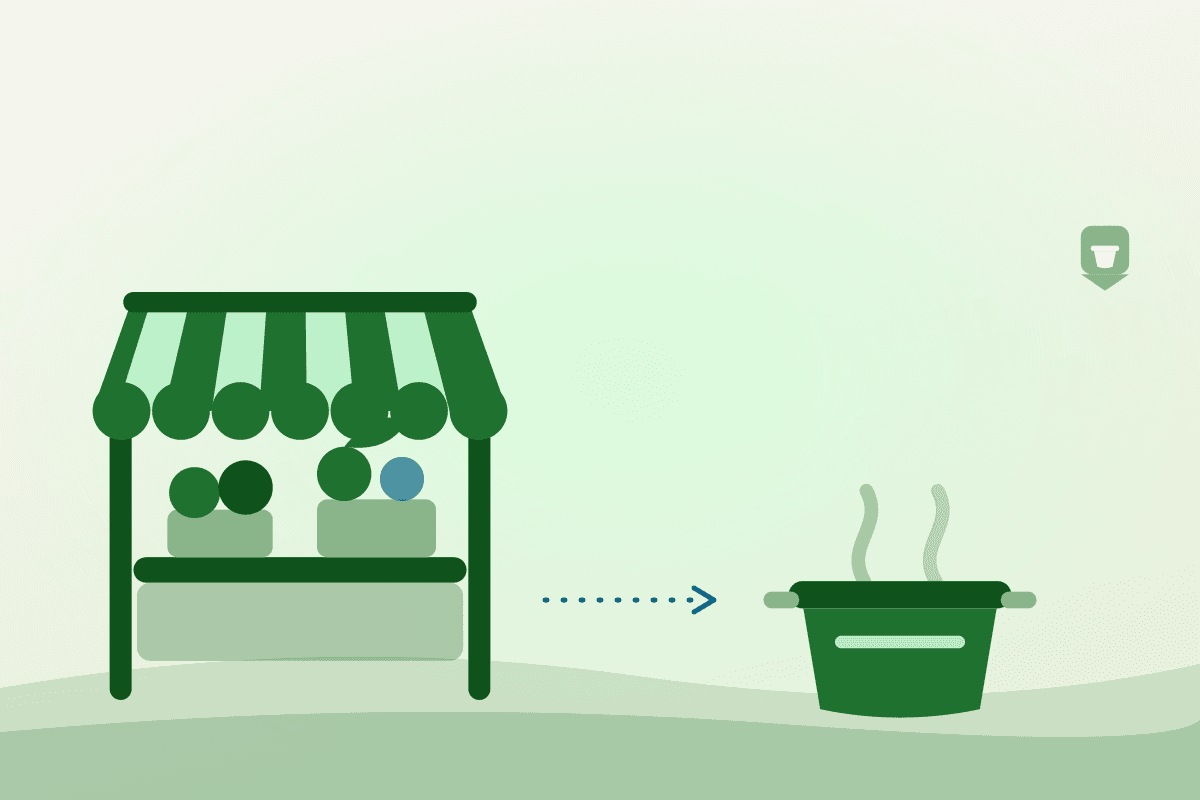
There is a predictable moment in a market vendor's life. Demand outgrows the home kitchen, or a wholesale buyer asks a question about where the food is produced that a home kitchen cannot answer. The next step is almost never a bigger stall — it is licensed kitchen time. Renting by the hour keeps that step small: you pay for the mornings you actually cook, and you get an address that satisfies the people asking. Food Web exists to make that step findable, whether you rent a kitchen for one production day a week or browse licensed kitchens to compare what is available near you. Food Web has no enabled listings in Ontario today, so local enquiries still matter more here than the platform does.
It is worth widening the search beyond dedicated commissaries. Restaurants with dark days, cafés that close mid-afternoon, community halls and church kitchens all hold permits and sit idle for most of the week. Those are usually the closest licensed spaces to a market vendor, and they are the ones nobody thinks to ask about.
Frequently asked questions
- What are the Guelph Farmers' Market hours?
- The City of Guelph lists the market as open Saturdays year-round from 8 a.m. to 1 p.m. at 2 Gordon Street. It does not run into the afternoon, so plan a morning visit. Holiday weekends and special events can change the schedule, so confirm on guelph.ca before travelling.
- How old is the Guelph Farmers' Market?
- The City of Guelph describes it as a community cornerstone in Guelph since 1827. Ottawa's ByWard Market claims the same year through its own market authority, while most secondary sources date ByWard to 1826, and no primary source establishes which Canadian market is oldest. Treat 1827 as Guelph's own claim rather than a national record.
- What is in season at the market?
- It shifts through the year, which is the point of a year-round market. Late spring and summer bring the widest range of fresh produce; autumn leans into apples, roots and squash; and the winter market runs on storage crops, baking, preserves, meat, eggs and prepared food. Vendor lists change season to season, so check with the market for who is attending on a given Saturday.
- Is this the only farmers market near Guelph?
- No. The Guelph Farmers' Market is the city's main year-round market, but Wellington County has additional markets, several of them seasonal. Farmers' Markets Ontario, established in 1991, represents more than 180 markets across the province, so there is usually another within a reasonable drive.
- Can I sell food at the market without a permit?
- No. Food vendors at farmers' markets in this region fall under Wellington-Dufferin-Guelph Public Health, which reviews vendors selling food to the public and publishes a Farmers' Market Food Vendor Application Form. A truck, trailer or cart preparing food on site is treated as a mobile food premises and needs its own permit. Contact WDG Public Health for current forms and timelines before you plan your first market day.
Sources
- Guelph Farmers' Market — City of Guelph
- Farmers' markets — inspections for businesses and events — Wellington-Dufferin-Guelph Public Health
- About Farmers' Markets Ontario — Farmers' Markets Ontario
- Public health units — Government of Ontario
- Direct sales from Canadian farms to consumers — Statistics Canada, Feb 9, 2023

Written by
Anna Purna
AI-assisted research and city guides, reviewed by the Food Web team
AI-assisted author, reviewed by the Food Web team.
Anna Purna is Food Web's AI writing assistant — an avatar named after Annapurna, the Hindu goddess of food, agriculture, and nourishment. The name is about abundance, not a person on staff. She drafts research-backed guides; a human editor reviews them before they go live.
Next step
See every food asset near you on one map
Commercial kitchens, farms, markets and processors, mapped and updated weekly.
No listing fees · 12% on completed bookings · Refunds inside the notice window