The short answer
What do Alberta's cottage food laws allow?
Alberta's cottage food rules let you sell low-risk, home-prepared food without a permit, in effect since 1 June 2020. You can sell from home (including online and mail order), at special events and at farmers' markets, as long as each item carries the required label. Meat, poultry, seafood, raw milk and anything needing refrigeration are excluded.
- Permit None for low-risk home-prepared food, and no routine inspection by Alberta Health Services
- Where to sell Direct to customers: from home, online or by mail order, at special events and at farmers' markets
- Label A home-kitchen-not-inspected statement, “not for resale”, your name and contact, the food’s name and the date made
- Not allowed Meat, poultry, seafood, raw milk, uninspected eggs, home-bottled water and anything that needs refrigeration
- Gig chef review Survey closed 21 April 2025; no outcome or rule change published as of 16 November 2026
Alberta cottage food laws are short and practical. Since 2020, the province's Food Regulation has let anyone make low-risk food in their own kitchen and sell it directly to customers, with no food handling permit and no commercial kitchen. This guide covers what you can sell, what you can't, where you can sell it, what goes on the label, which local licences still apply, how Alberta compares with other provinces, and where the province's 2025 review of the gig chef economy stands. It is the second guide in our series on permitting models, after our explainer on California's MEHKO permit. For other permit guides, see our licensing and permits hub.
What can you sell from home in Alberta?
The rules sit in Part 6.1 of Alberta's Food Regulation (AR 31/2006). An amendment the province announced on 28 May 2020 added them, and the Government of Alberta's fact sheet for operators dates them from 1 June 2020. It defines low-risk home-prepared food as food made in your own home whose acidity or moisture keeps harmful bacteria from growing without refrigeration, with no meat, poultry, seafood or unpasteurized milk.
The province's fact sheet for operators lists the kinds of food that qualify. The table below summarizes it.
| Category | Examples | Conditions |
|---|---|---|
| Baked goods | Bread and buns, cookies, cakes, muffins, fruit pies, tortillas, doughnuts, waffles, churros | No meat, dairy, cheese or meringue fillings; only sugar icing or buttercream made without eggs, cream or cream cheese |
| Sweets and snacks | Chocolate, hard candy, fudge, toffee, brittle, popcorn, vegetable and potato chips, candied apples, cotton candy | Must not need refrigeration |
| Dry foods | Dried fruit and vegetables, cereal and grain mixes, noodles, coffee beans, tea, spices, dried herbs, granola, trail mix, dry baking and soup mixes | Noodles must be egg-free |
| Condiments and ingredients | Honey, syrup, wine and herb vinegar, nut butter | Must not need refrigeration |
| Fresh produce | Whole fresh fruit and vegetables, microgreens | Microgreens cut at the first true leaf and sold with stems and leaves attached; whole produce needs no label |
| Acidic or low-moisture preserves | Jam, jelly, pickled vegetables, relish, salsa, fruit butter | pH 4.6 or lower, or water activity 0.85 or lower; salsa made with tomatoes must be below pH 4.2 |
Eggs and dairy are allowed only when they are fully cooked in the final product, such as eggs baked into a cake. Inspected ingredients must come from an inspected source, so you can't use someone else's homemade jam in your product. Only you and your household may make the food.
What foods are not allowed?
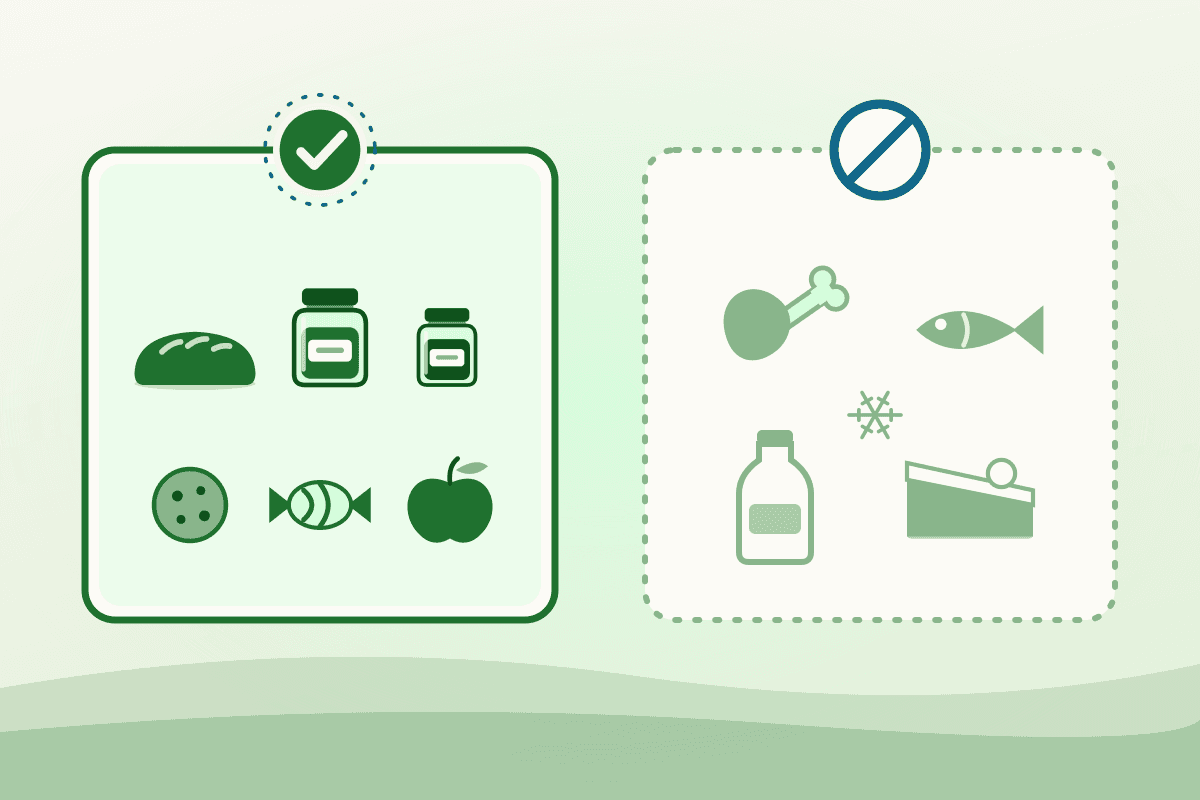
Anything that needs refrigeration is outside the rules, because it is not low-risk. The regulation and the fact sheet also name specific exclusions:
- Meat and poultry, including meat pies and sandwiches with meat
- Fish and seafood
- Raw (unpasteurized) milk
- Uninspected eggs (inspected eggs are fine when fully cooked in the product)
- Water: you may not bottle and sell it
- Desserts with cream, custard, cream cheese or meringue, such as cheesecake and cream pies
To sell any of these, you need a food handling permit from Alberta Health Services (AHS) and an approved commercial kitchen, which the section on commercial kitchens below explains.
Where can you sell home-prepared food in Alberta?
Selling food from home in Alberta under these rules means selling directly to the person who will eat it. The Government of Alberta recognizes three channels:
- From home, including online and mail-order sales. No one may eat at your home as a customer, but you can hand out free individually portioned samples.
- At special events, such as craft fairs and festivals. Food is packaged at home and sold in that packaging, and you can sell only your own products. Helpers from outside your household may sell for you.
- At farmers' markets, where home-prepared foods were sold before 2020. You follow the labelling rules plus the market's own requirements.
What you can't do is sell to a business. The regulation bars reselling low-risk home-prepared food or using it as an ingredient in food for sale, and AHS says these operators cannot supply permitted food facilities. A café or grocer can't stock your jam.
Do you need a permit, licence or food safety course?
Provincially, no permit. You don't need an AHS food handling permit, a commercial kitchen or a routine inspection to sell low-risk home-prepared food. AHS can still inspect in response to a food safety concern, such as an outbreak.
Training is encouraged, not required. AHS offers free online food safety courses and home-study booklets, some covering home canning.
Municipal licences and zoning still apply. For example, in Calgary every home-based food business needs a business licence (Food Service – Premises) and approval for its location, according to the City of Calgary (checked 16 November 2026). The city lists low-risk home-prepared food as fitting Home Occupation – Class 1, the default approval, which costs $0 and takes about five business days. You need a Home Occupation – Class 2 development permit if you add a second commercial-grade kitchen at home, expect more than three customer visits a week, or don't meet every Class 1 rule. Class 2 costs $481 ($449 for the permit plus $32 for advertising) and takes about 10 to 12 weeks. Questions go to Calgary's Planning Services Centre.
Federal rules can apply too. The provincial fact sheet points operators to the Canadian Food Inspection Agency (CFIA) for federal requirements, which can apply if you ship food outside Alberta.
What must go on the label?
Section 52.2 of the Food Regulation requires every item to be labelled before sale with:
- A statement that the food was made in a home kitchen that is not subject to inspection
- A statement that the food is not for resale
- Your name, your business name, and your email address or phone number
- The name of the food
- The date it was made
The fact sheet says labels must be legible and can be a tag, sticker or card that goes with the product. Whole fresh fruit and vegetables need no label. The same labelling applies to home-prepared food sold at farmers' markets.
How do Alberta cottage food laws compare with other provinces?
Canadian provinces regulate homemade food in different ways. The table compares Alberta with Nova Scotia, which publishes a fact sheet on low-risk home-baked goods, and Ontario, which eased its Food Premises Regulation for low-risk food from 1 January 2020.
| Alberta | Nova Scotia | Ontario | |
|---|---|---|---|
| Rules | Food Regulation (AR 31/2006), Part 6.1, since 2020 | Provincial fact sheet on low-risk home-baked goods (Food Safety Regulations) | Food Premises Regulation (O. Reg. 493/17), section 3.1, since 1 January 2020 |
| Foods covered | Low-risk foods: baked goods, sweets, dry foods, condiments, whole produce and acidic or low-moisture preserves | Low-risk home-baked goods such as cookies, breads, muffins and cakes | Low-risk foods prepared in a home kitchen |
| Permit | None | None under the Food Safety Regulations | Notify your local public health unit before you open |
| Inspection | No routine inspection; AHS can follow up a food safety concern | Public health officers can inspect if unsafe practices are reported | The home kitchen counts as a food premises, which public health inspectors inspect |
| Where you can sell | Direct to customers: from home (including online and mail order), at special events and at farmers' markets | Public markets, bake sales, temporary events and direct to the person who will eat it | Ask your local public health unit and municipality |
| Where you can't sell | To shops, cafés or other food businesses for resale | Restaurants, caterers, bakeries, grocery and convenience stores, coffee shops, hospitals, care homes and licensed child care | Ask your local public health unit |
| Food safety training | Encouraged, not required | Not mentioned in the fact sheet, which sets out safe handling practices | Low-risk-only premises are exempt from food handler certification |
The three take different routes. Alberta lists the foods and sales channels in its regulation and does without a permit. Nova Scotia's guidance is written for baked goods and names the places you can and cannot sell. Ontario keeps home kitchens inside its food premises system but, as York Region Public Health explains, exempts low-risk-only kitchens from some equipment and training rules.
When do you need a commercial kitchen in Alberta?
You need an AHS food handling permit, and in practice a kitchen built to commercial standards, once you make higher-risk food such as meat pies or cheesecake, sell wholesale to cafés or stores, or grow past what a home kitchen can handle. AHS lists home-based businesses that prepare high-risk foods among the commercial food establishments that need a permit.
The AHS guide, Starting a Food Business, sets out 10 steps, from checking zoning and drawing a floor plan to food safety training, the permit application and an approval inspection. After you send in the required documents, AHS says inspectors aim to schedule the approval inspection within 7 business days. A permit lasts one year and renews each year. Under section 8 of the regulation, operators who sell only prepackaged low-risk food pay no permit fee.
| AHS permit class | Annual fee | Typical operation |
|---|---|---|
| Class I | $100 | Non-perishable or prepackaged products with minimal handling |
| Class II | $175 | Limited handling of raw ingredients, food cooked to order, hot or cold holding for a single meal service |
| Class III | $250 | Extensive handling of raw ingredients or high-risk food, or high-risk clientele |
| Class IV | $500 | Several food operations in one building under the same owner |
Rules for permitted kitchens are also changing. Amendments approved in December 2025 take effect on 1 January 2027. From then on, food establishments must display their latest public health inspection report. A business with five or fewer food handlers on site must have someone in charge who holds a current, valid food safety certificate.
Many growing food businesses rent time in a kitchen that already holds a permit instead of building one. Our guides to commercial kitchen rental and finding a shared kitchen near you explain how that works. You can also browse the kitchens listed on Food Web or create a free account.
What is Alberta's gig chef review?
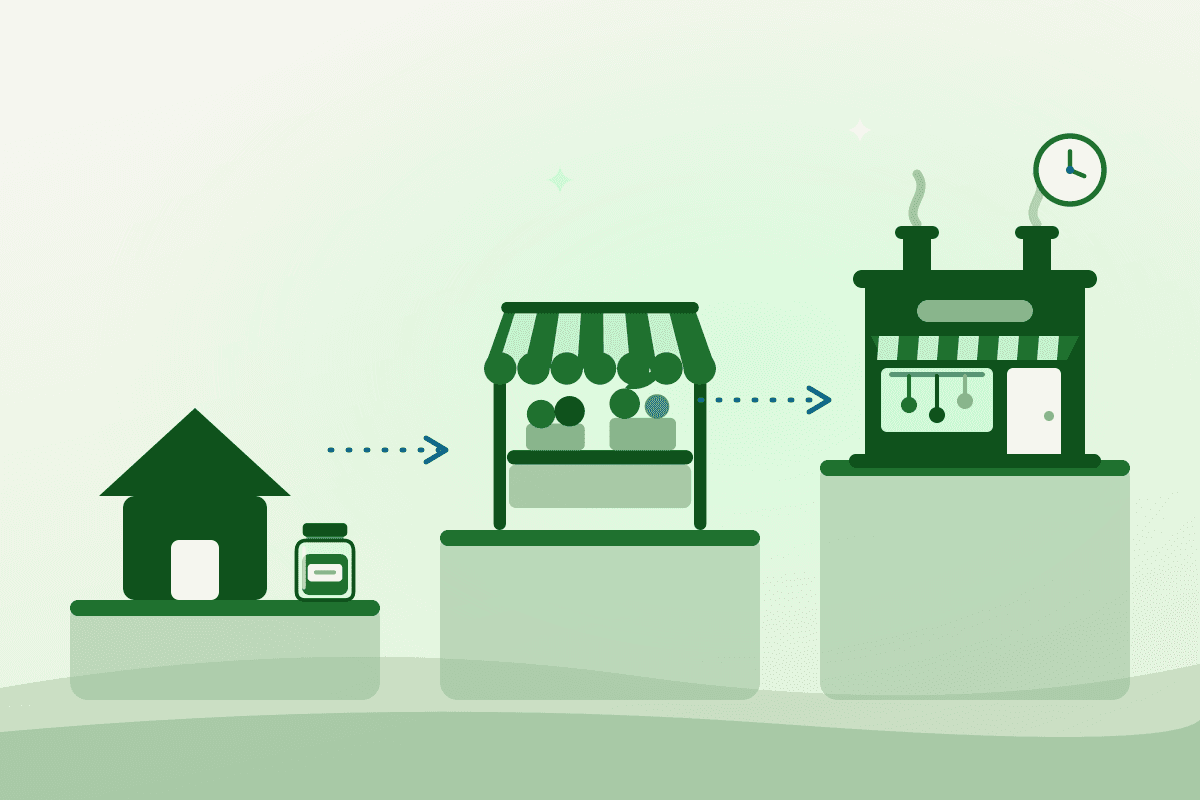
In 2025 the Government of Alberta asked how a “gig chef economy” could work under its food safety rules. Its engagement page describes gig chefs as cooks who work in different commercial kitchens for short periods, sometimes only a few hours at a time, often on short-term or freelance contracts. Kitchen owners rent out space they are not using, and several gig chefs may share the same kitchen. The food might be catered, served on site, picked up, or sold through online platforms.
What Alberta said. The province said some Food Regulation requirements “slow down timely access to rentable commercial kitchen space.” It said it was considering changing or removing requirements that duplicate others or are unnecessary, without putting food safety at risk.
The 2025 dates. The province asked for written submissions in March 2025 and ran an online survey from 24 March to 21 April 2025. A review of the Institutions Regulation ran on the same dates, and both pages say the feedback will inform Alberta's food safety rules.
Where it stands. The engagement page marks the review as completed and was last updated on 7 November 2025. As of 16 November 2026 the province had published no outcome and no gig chef rule change. The Food Regulation amendments approved in December 2025 deal with inspection reports, food safety certificates and child care settings, according to the province's child care food safety review page. They don't mention gig chefs or shared kitchen rentals, and they leave the home-prepared food rules unchanged. The same amendments move the regulation's expiry date, which forces a review, from 30 June 2027 to 30 June 2032. Until the province publishes something new, cooks who rent commercial kitchen time in Alberta work under the existing permit rules.
For a different model, California lets small home restaurants operate under a permit; see our MEHKO guide.
Frequently asked questions about Alberta's cottage food laws
- Do I need a permit to sell baked goods from home in Alberta?
- No, as long as they are low-risk. Since 1 June 2020, Alberta's Food Regulation lets you sell low-risk home-prepared food, including most breads, cookies, cakes, muffins and fruit pies, without a food handling permit or a commercial kitchen. Fillings with meat, dairy, cheese or meringue, and cream or cream cheese icing, are not low-risk. Your municipality may still require a business licence.
- Can I sell homemade food online in Alberta?
- Yes. The Government of Alberta confirms that low-risk home-prepared food can be sold from home, including online and by mail order. Every item needs the required label, and you sell to the end customer, not to a business. If you ship outside Alberta, federal rules from the Canadian Food Inspection Agency can apply.
- Can I sell my home baking to a café or store in Alberta?
- No. The Food Regulation says no one may resell low-risk home-prepared food or sell food that uses it as an ingredient, and every label must say the food is not for resale. To supply cafés, shops or restaurants, you need an Alberta Health Services food handling permit and an approved commercial kitchen.
- Is there a sales limit for home-prepared food in Alberta?
- The provincial rules set no sales cap and no limit on how many items you sell. Local rules can still shape how you operate: in Calgary, for example, the default home occupation approval allows up to three business visits to your home a week, and more visits than that need a Class 2 permit.
- Can I sell cheesecake or meat pies from home in Alberta?
- No. Cheesecake needs refrigeration and contains cream cheese, and meat pies contain meat, so neither counts as low-risk home-prepared food. Selling them requires an Alberta Health Services food handling permit and an approved commercial kitchen, which many small producers rent by the hour.
Sources
- Low-risk home-prepared foods — Government of Alberta, Feb 12, 2024
- Low-risk home-prepared food: fact sheet for operators (copy hosted by the City of Medicine Hat) — Government of Alberta, May 27, 2020
- Food Regulation, Alberta Regulation 31/2006 (consolidated to AR 125/2024) — Alberta King's Printer, Jun 21, 2024
- Improving access to local food — Government of Alberta, May 28, 2020
- Gig chef economy engagement — Government of Alberta, Nov 7, 2025
- O.C. 410/2025: Food Amendment Regulation — Alberta King's Printer
- Food Safety and Licensed Facility-Based Child Care Review Panel — Government of Alberta, Mar 23, 2026
- Starting a Food Business — Alberta Health Services, Sep 22, 2026
- Home-based food business — City of Calgary
- Preparing low-risk home-baked goods for sale — Nova Scotia Department of Environment and Climate Change
- O. Reg. 471/19: Food Premises (amending O. Reg. 493/17) — Government of Ontario, Dec 23, 2019
- Food premises operators — York Region Public Health

Written by
Justin Andrews
Kitchen access and local food infrastructure, Atlantic Canada
Justin Andrews is a chef-turned-founder who has spent the last decade working across farms, markets, restaurants, nonprofits, and academic research. He’s now the CEO of Food Web, a platform built to unlock underused commercial kitchens and strengthen local food systems. Justin writes about food, entrepreneurship, and the work of building resilient local economies.