

Loading
Loading

Justin Andrews is a chef-turned-founder who has spent the last decade working across farms, markets, restaurants, nonprofits, and academic research. He’s now the CEO of Food Web, a platform built to unlock underused commercial kitchens and strengthen local food systems. Justin writes about food, entrepreneurship, and the work of building resilient local economies.

What a commercial kitchen for lease actually means next to short-term rental, when a long-term lease makes sense for a food business, and what to check in the agreement.

Where the food banks and meal programs in Sydney, Nova Scotia are, how to check current hours with Feed Nova Scotia's Find Food tool and 211, and how Sydney's food network fits together.

The Local Food Infrastructure Fund's new $20-million Community Support Stream explained: who could apply, how the money reaches local food banks, and what it can pay for.

Where to find a commissary kitchen near you that your regulator will accept, how commissary kitchen cost is structured, and a checklist for vetting a kitchen before you sign.

A guide to the Fredericton Boyce Farmers Market — hours, location, what to buy, and how it fits into the city's wider local food and nonprofit ecosystem.

Where the farmers markets in Sydney and Cape Breton actually are, what is sold there, and how the island's nonprofit and community-kitchen scene supports local food.

Where Ottawa's farmers markets actually are — the Ottawa Farmers' Market's three sites, ByWard, Parkdale and the Organic market — what each sells, and what the capital's wider food network looks like.

Where Charlottetown's two farmers markets actually are in 2026 — including the co-op's temporary North River Road home — and what PEI's wider local food scene looks like.

Why food truck and mobile vendor operators need a licensed commissary kitchen, what one actually provides, what it costs, and how to evaluate one before signing.

Montreal's public markets, who runs them, and what's actually sold at Jean-Talon, Atwater and Maisonneuve — plus the neighbourhood and independent markets alongside them.

A kitchen incubator bundles licensed kitchen space with mentorship and business support. Here's how that differs from a straight commercial kitchen rental — and which one you actually need.

A guide to the St. John's Farmers' Market on Freshwater Road — when it runs, what the Community Market Building offers, and why the city's farm count stands out.

How to find a food bank in Dartmouth using live directories rather than a stale address list — and how local farms and food businesses can help.

The Local Food Security Initiatives program is accepting applications until August 31, 2026. Here's a step-by-step plan for non-profits to turn food security grant funding into kitchen access.
Food Web has received a $25,000 grant from Feed Nova Scotia, with $15,000 going directly into a credit pool that subsidizes kitchen rentals for food entrepreneurs across the province.
Food Web has partnered with the Restaurants Association of Nova Scotia to help commercial kitchens earn more by renting unused kitchen space to local food businesses.
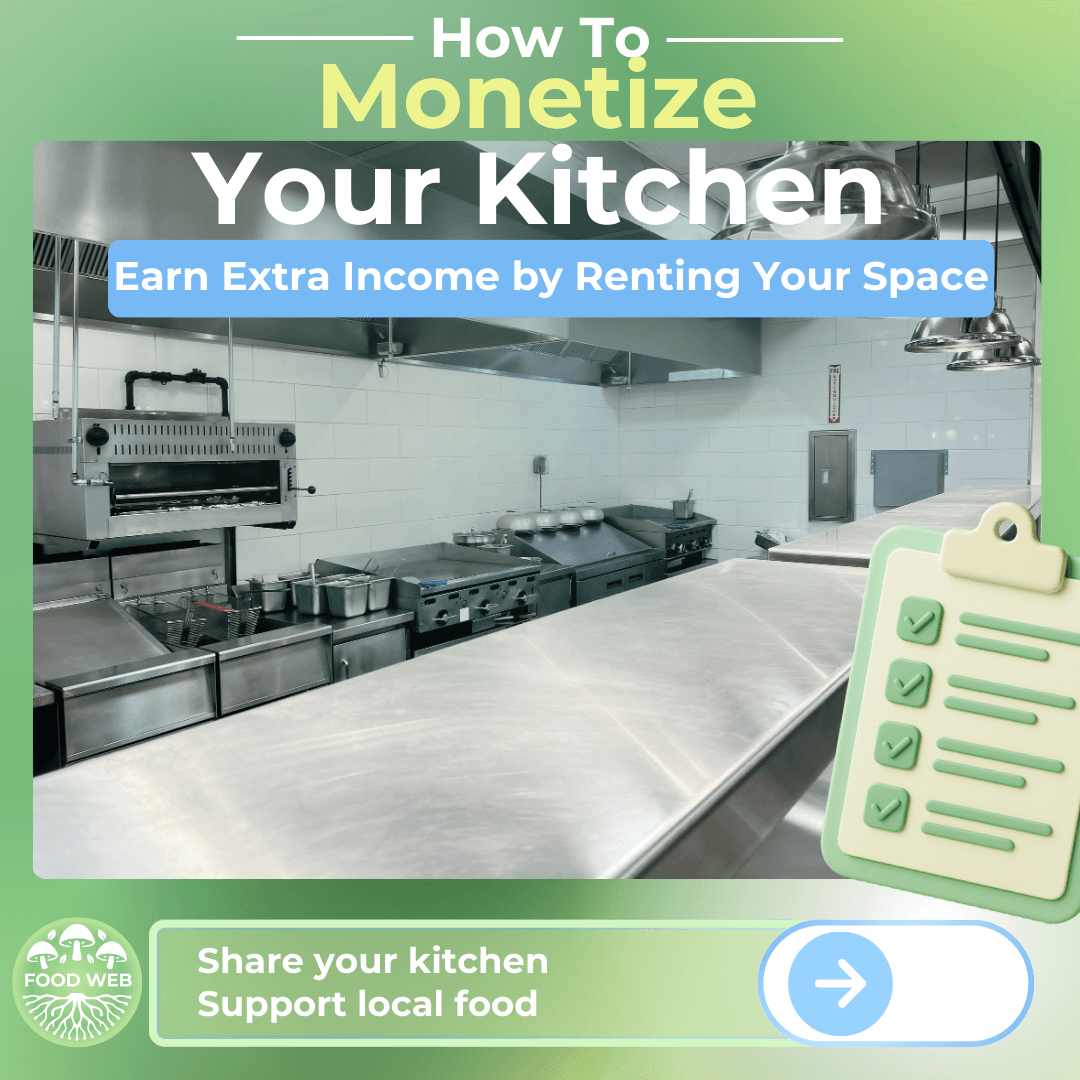
A step-by-step guide for kitchen owners putting a commercial kitchen up for rent — permits, renter selection, pricing, insurance, orientation and cleaning standards.
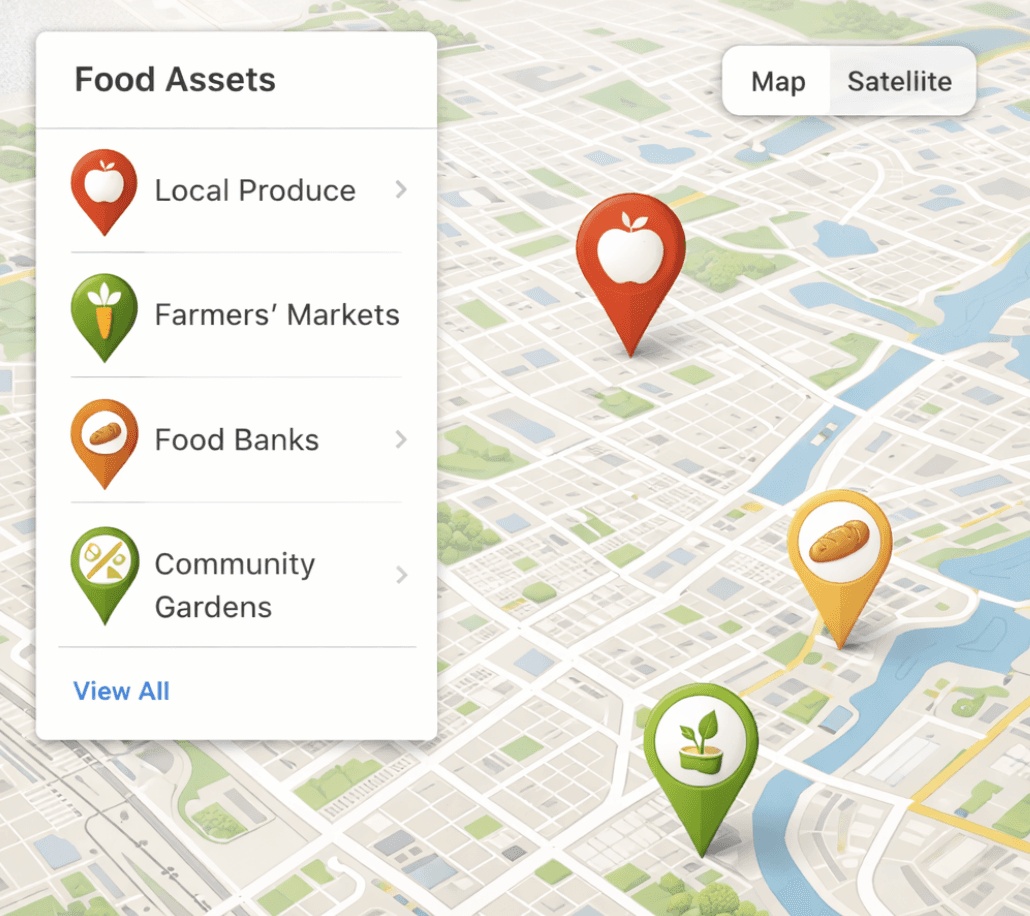
Food asset maps help people find and understand local food resources. This post explores how they’re used across Canada and how Food Web is building a more connected, collaborative approach.

Food Web’s model is built on giving back. Learn how aligned incentives, referrals, and flexible pricing empower kitchens, renters, and communities to grow together sustainably.
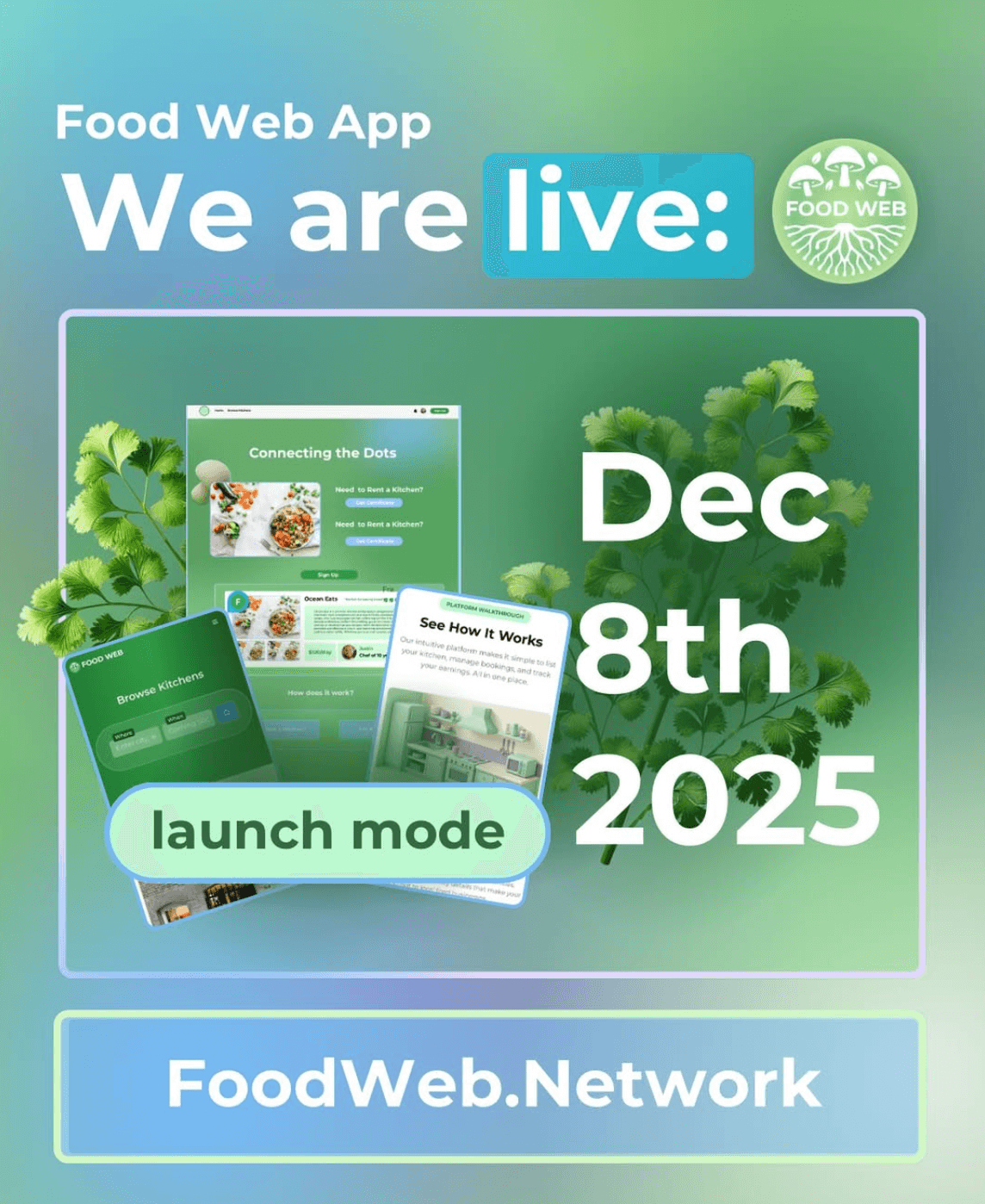
Food Web announced grand launch of new platform for sharing kitchens. It makes it easy to find and book licensed commercial kitchens in Nova Scotia, New Brunswick, and PEI.

A look at how Food Web grew from research and community conversations into a live platform helping people access shared kitchens.
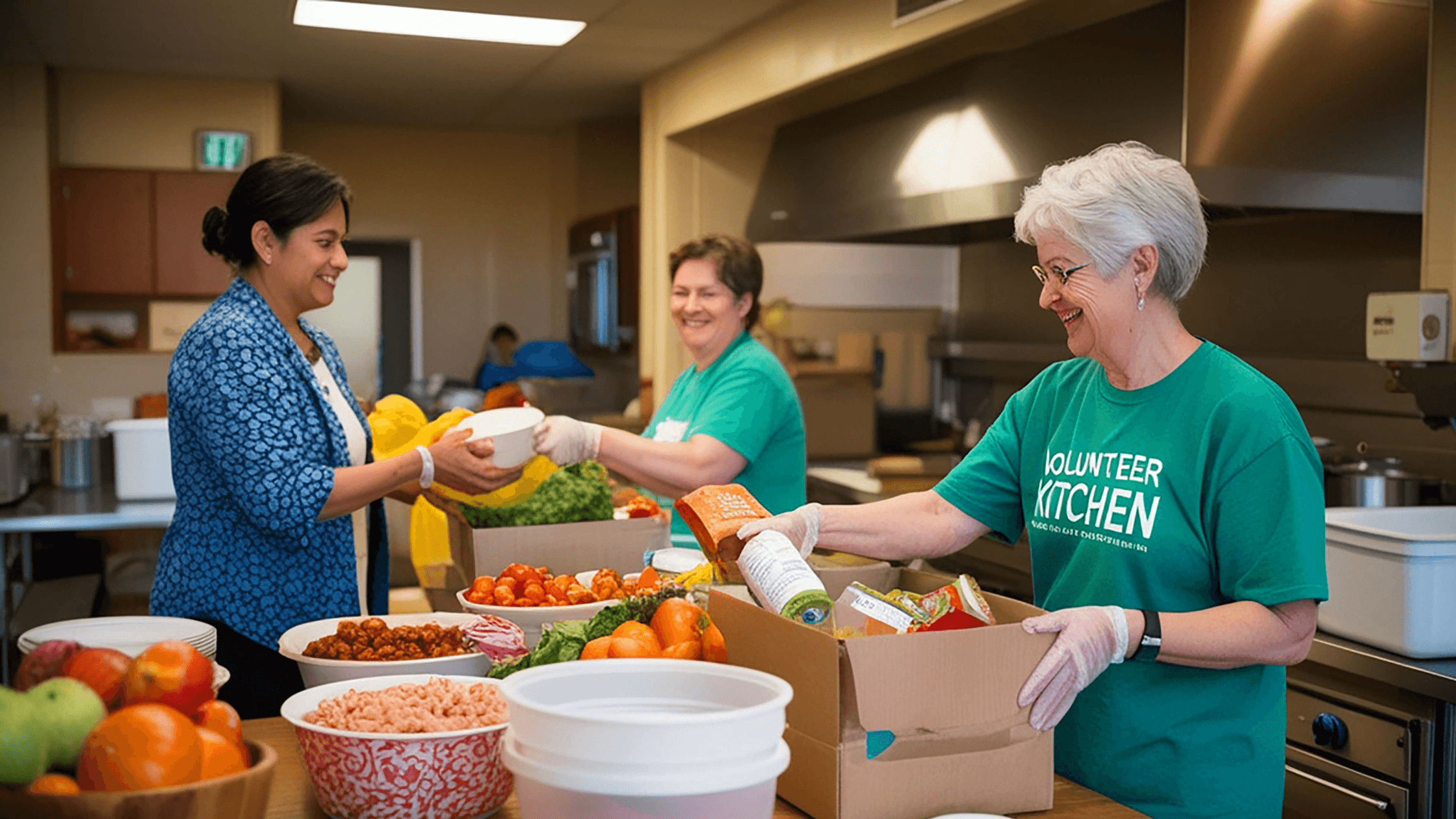
Shared kitchens are unlocking Canada’s local food economy. Food Web connects food entrepreneurs with underused licensed kitchens, making it easier to cook, create, and grow locally.

Many food entrepreneurs are ready to grow, but can’t find licensed kitchens to rent. Food Web connects them with underused kitchens, unlocking new opportunities in the local food economy.

Food Web began with one chef’s struggle to find a kitchen. When founder Justin Andrews couldn’t find licensed space to grow his small baking business, he set out to solve the problem.