
Working out how to volunteer at a food bank is mostly a matter of knowing that there is no single national process. Each organisation runs its own portal, sets its own age rules and schedules its own shifts, and the differences between them are larger than you would expect. What follows is what the work actually involves, what the rules tend to be, and the order of operations for getting yourself onto a schedule.
What do food bank volunteers actually do?
2,355,075
food bank visits across Canada in a single month
Food Banks Canada, HungerCount 2026 — visits in March 2026, 117% above 2019. Volunteer hours scale with that demand.
Source2,575
food banks reported to the 2026 HungerCount
Food Banks Canada — a census of food bank agencies, organisations and programs across the country.
Source3,606,171
meals and snacks served in one month, outside hamper programs
Food Banks Canada, HungerCount 2026 — March 2026, excluding hamper programs. Meal service is its own volunteer stream.
SourceThe bulk of food bank volunteering is sorting. Donated food arrives mixed, some of it past date, some of it damaged, much of it in bulk packaging that has to be broken down into household quantities. Volunteers check dates, discard what cannot be given out, and repack the rest. It is physical, repetitive and genuinely useful: nothing moves out of a warehouse until it has been through that step.
Beyond sorting, Daily Bread Food Bank's published roles give a fair picture of the range: picking pre-packaged boxes in the warehouse and stacking them on pallets, kitchen prep making soups and casseroles, administrative work at a welcome centre, special events and seasonal food drives, and front-of-house roles checking people in and out on a distribution day. That last one it flags plainly — excellent people and service skills are a must — because it is the role where you meet the people the organisation serves.

Who can volunteer — age minimums, groups, students and corporate teams?
This is where assuming a national rule will trip you up. Two of Canada's largest food banks sit three years apart on their age minimum, and both note that individual roles can carry stricter limits than the headline number — warehouse work involving pallet jacks or forklifts is usually adults only regardless of the general policy.
| Organisation | Minimum age | Groups | How you start |
|---|---|---|---|
| Daily Bread Food Bank (Toronto) | Typically 18; some roles differ | Community groups, schools grades 6–12 and corporate teams, via a separate group process | Create a Volunteer Hub account and book an online info session |
| Greater Vancouver Food Bank | 15; varies by role | Group applications accepted only with four or more volunteers | Submit the group or individual application, then wait to be contacted |
| Youth without an eligible role | Varies | Food drives are the usual route in | Daily Bread credits one volunteer hour for every 25 non-perishable items collected |
If you are volunteering for school community-service hours, say so when you apply. Organisations that take students usually have a defined youth stream, and the food-drive route exists precisely because warehouse floors are not always suitable for younger volunteers. Corporate teams should expect to book well ahead: group slots are limited, and the weeks either side of the December holidays are the hardest to get — which is also why a standing shift in February is worth more to an organisation than a one-off team day in December.
How do I find and sign up for a shift at a food bank near me?
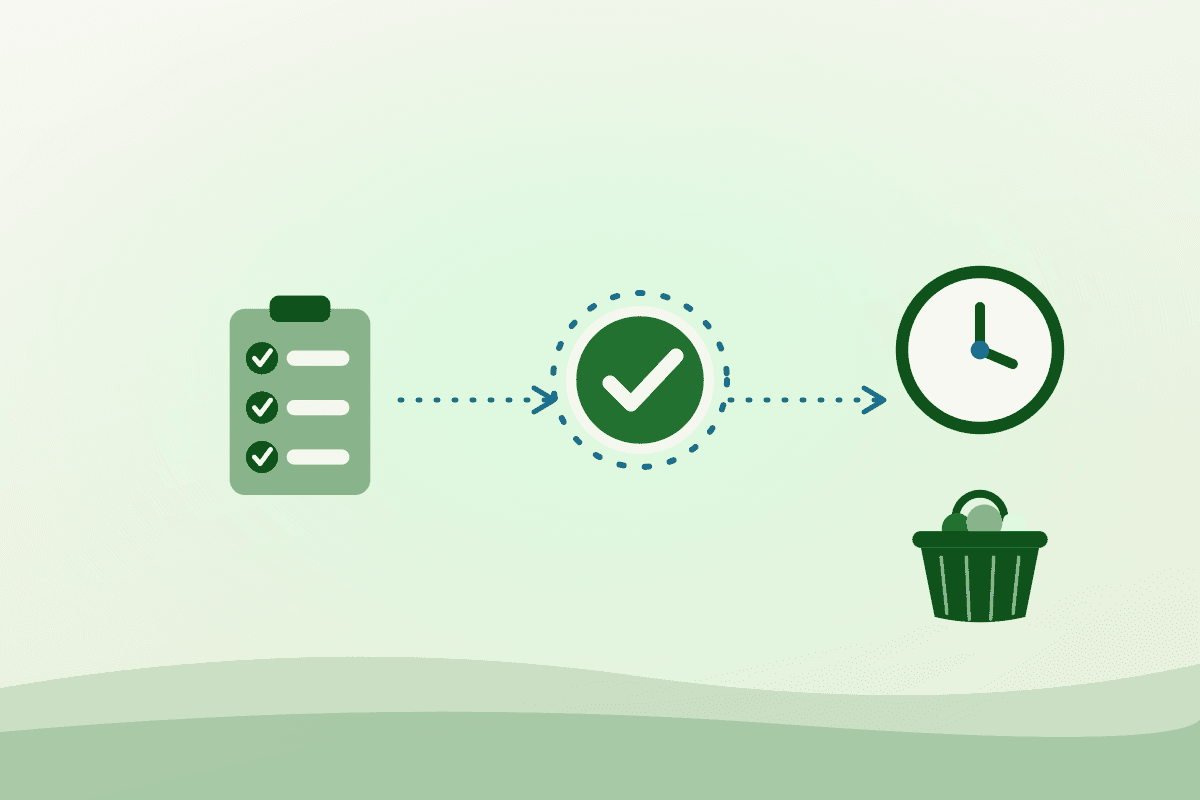
Booking your first food bank shift
Step 1: Find the organisations near you
Look for the food banks, community kitchens and food organisations that actually operate in your area, rather than the best-known national name. Food Web's Asset Map plots them alongside the farms, markets and grocers around them.
15 minutes
Step 2: Read that organisation's volunteer page before applying
Check its age minimum, whether it needs individuals or groups right now, and which roles are open. These are set locally, so the answer you find on one food bank's site does not transfer to the next.
10 minutes
Step 3: Create an account on its volunteer portal
Most larger organisations run scheduling through a portal rather than email. You will register, give basic contact details and emergency information, and sometimes consent to a background check for roles involving money or vulnerable people.
20 minutes
Step 4: Attend the orientation or info session
Usually a short online session covering safety, food handling basics and how the organisation runs. Some one-off public sorting events let you skip this; a recurring role generally does not.
30–60 minutes
Step 5: Book a shift and turn up
Shifts are commonly about three hours including a short break. Wear closed-toe shoes and clothes you do not mind getting dirty, and expect to be on your feet. Training for the specific task happens on the day.
~3 hours per shift
Total time: 1–3 weeks from applying to your first shift
What should I expect on my first shift?
Expect to be taught the task on arrival rather than beforehand. Organisations provide the training and orientation for the specific job, so nobody expects you to know what a short-dated pallet looks like. Expect noise, movement and a quantity of food that is genuinely startling the first time you see it stacked.
Expect, too, that the work is unglamorous and that this is the point. The useful volunteer is the one who comes back next week. If you want to understand the system you are plugging into before you start, our city guides for Ottawa and Halifax show how a regional supplier and its member agencies divide the work, and the Food Maps hub collects the rest.
Food bank volunteering: common questions
- How old do you have to be to volunteer at a food bank?
- It depends entirely on the organisation. Daily Bread Food Bank in Toronto says its minimum is typically 18, while the Greater Vancouver Food Bank sets 15. Both note that individual roles can carry stricter limits. Check the specific organisation's volunteer page rather than assuming a national standard.
- How long is a food bank volunteer shift?
- Around three hours is typical. Daily Bread states that most of its shifts are three hours long including a short break. Shifts are usually on weekdays, though some organisations run weekend sorting sessions and distribution-day roles.
- Can my workplace or school group volunteer together?
- Usually yes, through a separate group process rather than individual sign-ups. The Greater Vancouver Food Bank only accepts group applications with at least four volunteers. Daily Bread welcomes community groups, schools from grades 6 to 12 and corporate teams. Group slots fill early, especially around the December holidays.
- Do I need experience or a food handler certificate to volunteer?
- No. Organisations provide the training and orientation needed for the role before you begin. A food handler certificate is only relevant for some kitchen roles, and where it is required the organisation will say so and often arranges it.
Sources
- Volunteer roles, minimum age, shift length and group volunteering — Daily Bread Food Bank
- Volunteer requirements and group applications — Greater Vancouver Food Bank
- HungerCount 2026 — Food Banks Canada, Oct 1, 2026
- Food rescue in Canada — volume and donor network — Second Harvest

Written by
Justin Andrews
Kitchen access and local food infrastructure, Atlantic Canada
Justin Andrews is a chef-turned-founder who has spent the last decade working across farms, markets, restaurants, nonprofits, and academic research. He’s now the CEO of Food Web, a platform built to unlock underused commercial kitchens and strengthen local food systems. Justin writes about food, entrepreneurship, and the work of building resilient local economies.
Next step
See every food asset near you on one map
Commercial kitchens, farms, markets and processors, mapped and updated weekly.
No listing fees · 12% on completed bookings · Refunds inside the notice window