
If you search for a food bank Montreal residents can walk into, the first name you will meet is Moisson Montréal — and it is the one place on this list you cannot visit for groceries. Montreal's food support is built in two layers: a regional supplier that moves food in pallets, and a scatter of neighbourhood organisations that hand it to people. Knowing which layer you are looking at saves a wasted trip.
What food banks and food-support organizations serve Montreal?
3.27 million
requests for food aid met across Quebec each month
Banques alimentaires du Québec, Bilan-Faim 2026 — the network reports monthly requests have passed 3.27 million and are still climbing.
Source1,400
local organisations supplied by Quebec's Moisson network
Banques alimentaires du Québec — 34 regional members, the Moisson et associés, supply 1,400 affiliated organisations that support 600,000 people a month.
Source2,355,075
food bank visits across Canada in a single month
Food Banks Canada, HungerCount 2026 — visits recorded in March 2026, 117% above 2019.
SourceMoisson Montréal is one of the 34 regional members Banques alimentaires du Québec calls the Moisson et associés. Its job is supply: take donated and rescued food in at volume, sort it, and push it out to the community organisations that run distributions. For somebody who needs groceries this week, the useful question is not "where is Moisson Montréal" but "which organisation does Moisson supply in my borough".
Those organisations do not all do the same thing. Le Dépôt, on Somerled Avenue in the NDG area, runs the Marché Depot as a grocery store rather than a hamper line: members book a monthly appointment and choose their own items, with a suggested contribution of $5, $7 or $10 and a standing promise that no one is ever turned away for lack of funds. It also serves meals through the Resto Depot, runs Cook Together workshops and operates mobile markets.
In the Sud-Ouest, Maison du Partage d'Youville distributes food to households from Rue Coleraine every Wednesday and Friday, and runs a thrift shop alongside it. Downtown, Centre Vertical hands out paniers alimentaires from Rue Berri on a short weekly schedule, with a focus on newcomers and people in precarious situations. Welcome Hall Mission, also known as Mission Bon Accueil, works at a different scale again: two Marché Bon Accueil grocery stores plus meals served every day across its pavilions.
| Where | What you get | When | Who it serves |
|---|---|---|---|
| Moisson Montréal | Supplies food onward to community organisations | Not a public pick-up point | The island, through the organisations it supplies |
| Le Dépôt — Marché Depot | Groceries you choose yourself; meals at Resto Depot | Monthly appointment | NDG and the surrounding west end |
| Maison du Partage d'Youville | Food baskets, plus a low-cost thrift shop | Wednesdays and Fridays | Sud-Ouest households |
| Centre Vertical | Panier alimentaire food baskets | Tue 2–5pm, Wed and Thu 10am–2pm | Downtown; newcomers and people in precarious situations |
| Welcome Hall Mission | Two grocery stores and daily meals | Daily | Montrealers in need, including people experiencing homelessness |
How do I find food support in my Montreal borough?
Start with 211. 211 Grand Montréal is a free referral service that indexes food programs along with housing, seniors' services and immigration support. You dial 211 from anywhere in the region, it answers around the clock, and its chat service replies within 35 minutes. Because it asks where you are before it answers, it solves the borough problem directly — which matters in a city where a west-island address and a Sud-Ouest address lead to two completely different organisations.

Two things are worth knowing before you call. First, most organisations serve a defined catchment, so the right one is the one covering your address rather than the one with the best website. Second, requirements differ: some ask for proof of address and an appointment, others operate as a drop-in. Asking on the phone takes a minute and avoids arriving with the wrong paperwork. If you are just outside the island, the same pattern holds one bridge north — our guide to food support in Laval maps the same two-layer structure onto a different set of organisations.

What does Montreal's food landscape look like on the map?
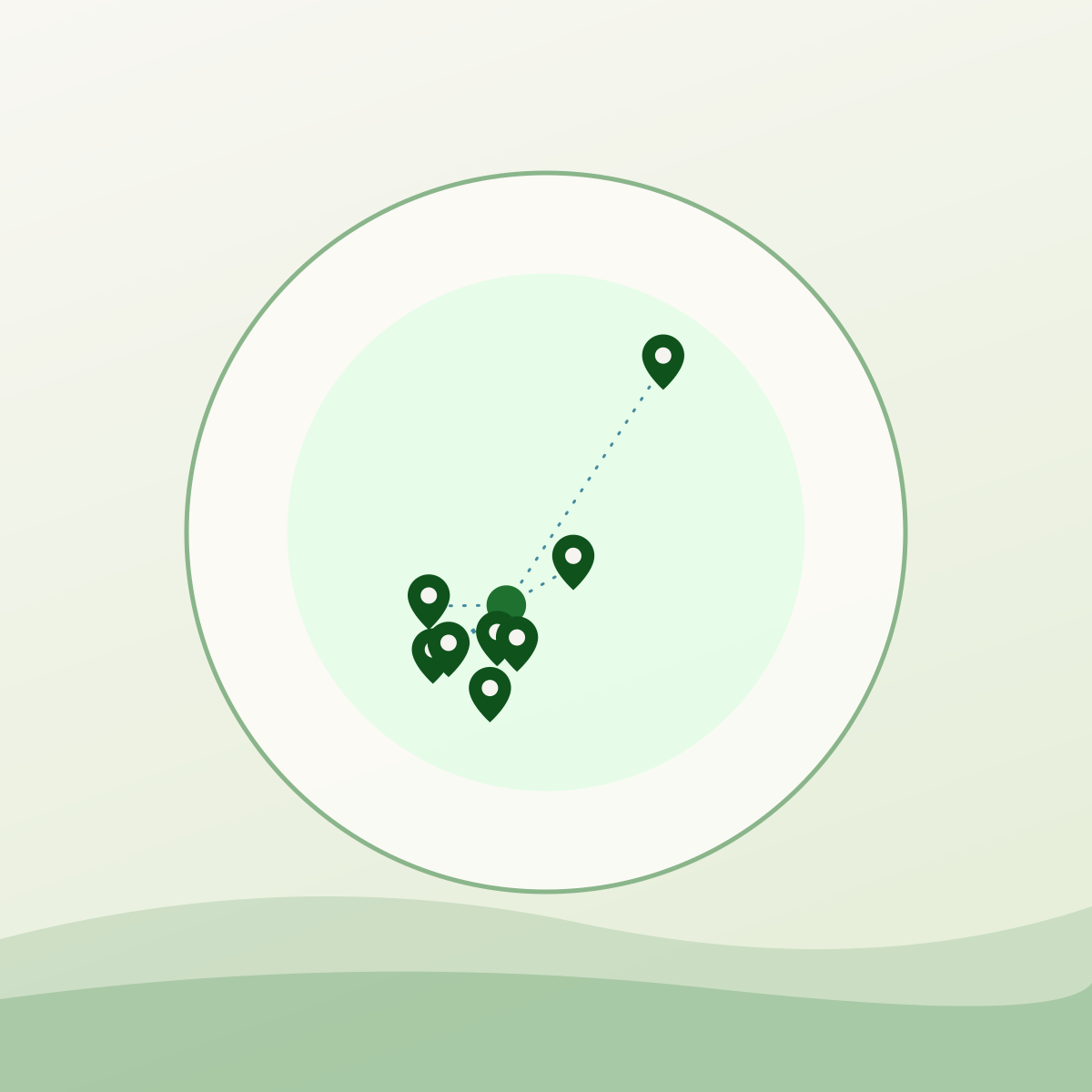
Food Web's Asset Map plots Montreal's food businesses and organisations on one page. It is worth being straight about what it shows: the mapped picture of Montreal is overwhelmingly commercial. Restaurants, cafés and bakeries make up most of what has been classified, the city's public markets are on there, and grocers are thin on the ground. The food-support layer is thinner still — the organisations named above are only now being added — so treat the map as a picture of Montreal's food economy that is still filling in on the food-access side.
Food Web map
Food businesses, public markets and food organizations in Montreal, Quebec
That imbalance is the honest state of an open map rather than a verdict on Montreal. The Asset Map fills in where people add to it, which is why the same city can carry a dense layer of restaurants and a sparse layer of food banks. Anyone can suggest an organisation, and a curator reviews it before it appears. If you run or use one of the organisations above, checking its entry — or adding one that is missing — is the single most useful thing you can do for the next person searching. You can also browse the city's full picture on the Montreal food map page, or read the companion guide to the city's public markets.
How can I help Montreal's food support network?
Each organisation above takes donations and volunteers directly, and each publishes what it actually needs — which is rarely the tin of soup at the back of your cupboard. Moisson Montréal's position in the supply chain means money and bulk food reach further there, while a neighbourhood organisation usually needs hands on a distribution day. If you work in food and have kitchen capacity to share, that is its own form of contribution: Food Web exists to connect under-used kitchens with the people who need them, and you can list or rent a kitchen through the platform. More city guides like this one live in the Food Maps hub.
Food bank Montreal: common questions
- Can I get groceries directly from Moisson Montréal?
- No. Moisson Montréal is a supply organisation: it collects, sorts and distributes food to community organisations across the island rather than serving individuals at a counter. To get groceries, contact one of the neighbourhood organisations it supplies, or call 211 to find the one covering your address.
- Where is the food bank for NDG and the west end of Montreal?
- Le Dépôt, on Somerled Avenue, runs the Marché Depot for the NDG area. It works as a grocery store rather than a hamper line: members book a monthly appointment and choose their own items, with a suggested contribution of $5, $7 or $10 and no one turned away for lack of funds.
- Do I need proof of address or ID to use a food bank in Montreal?
- It depends on the organisation. Many ask for proof that you live inside their catchment and run on appointments; others operate as a drop-in with no paperwork. Because requirements are set locally rather than city-wide, the reliable move is to phone ahead or ask 211 what that specific organisation expects.
- What is the difference between a food bank and a community meal in Montreal?
- A food bank gives you groceries to take home and cook. A community meal is food served ready to eat on site. Several Montreal organisations do both — Le Dépôt runs a grocery market and the Resto Depot, and Welcome Hall Mission runs grocery stores and serves daily meals — so it is worth asking which you are being offered.
Sources
- Bilan-Faim 2026 and the Moisson network — Banques alimentaires du Québec, Oct 21, 2026
- HungerCount 2026 — Food Banks Canada, Oct 1, 2026
- The Depot — Marché Depot, Resto Depot and community programs — Le Dépôt Community Food Centre
- Panier alimentaire and centre hours — Centre Vertical
- Aide alimentaire dans le Sud-Ouest — Maison du Partage d'Youville
- Marché Bon Accueil and daily meals — Welcome Hall Mission / Mission Bon Accueil
- 211 Grand Montréal — free referral service — 211 Québec

Written by
Justin Andrews
Kitchen access and local food infrastructure, Atlantic Canada
Justin Andrews is a chef-turned-founder who has spent the last decade working across farms, markets, restaurants, nonprofits, and academic research. He’s now the CEO of Food Web, a platform built to unlock underused commercial kitchens and strengthen local food systems. Justin writes about food, entrepreneurship, and the work of building resilient local economies.
Next step
See every food asset near you on one map
Commercial kitchens, farms, markets and processors, mapped and updated weekly.
No listing fees · 12% on completed bookings · Refunds inside the notice window