
The short answer
Waterloo Region has two well-known answers. The Kitchener Market's own site lists a Saturday outdoor market at 300 King Street East, with the indoor building and Food Hall temporarily closed, while St. Jacobs Farmers' Market, a twenty-minute drive north, has welcomed visitors since April 1975 and runs Thursdays and Saturdays year-round.
- Check the Kitchener Market's own site first Its schedule and the status of the indoor building are published by the market and nowhere else we could verify — treat both as things to confirm before travelling.
- Two markets, not one St. Jacobs Farmers' Market is a separate destination market north of Waterloo, not a branch of the Kitchener Market.
- St. Jacobs since April 1975 Thursdays 8 a.m. to 3 p.m. and Saturdays 7 a.m. to 3:30 p.m. year-round, plus Tuesdays June through August.
- 300-plus vendors at St. Jacobs The market reports roughly a million visitors a year.
- Vendors answer to the Region Region of Waterloo Public Health inspects food service businesses and supports special-event vendors on provincial food safety rules.
300+
vendors at St. Jacobs Farmers' Market
The market's own figure, alongside roughly one million visitors a year; it has welcomed visitors since April 1975.
Source180+
farmers' markets represented by Farmers' Markets Ontario
Farmers' Markets Ontario's own membership figure; the association was established in 1991.
SourceThat makes the farmers market Kitchener question slightly more interesting than it looks, because the region has two well-known answers: the downtown Kitchener Market, and the much larger St. Jacobs Farmers' Market a short drive north. Below: how they differ, who inspects the people selling you food, and what the rest of Kitchener's local food network looks like once you step past the stalls.
A word on sourcing before the details. St. Jacobs publishes its hours, season and vendor count on its own site, and those are the figures used here. The Kitchener Market's schedule and the status of its indoor building come from the market's own page and could not be corroborated elsewhere, so they are presented as the market's claim rather than as settled fact.
Where and when is the Kitchener Market?

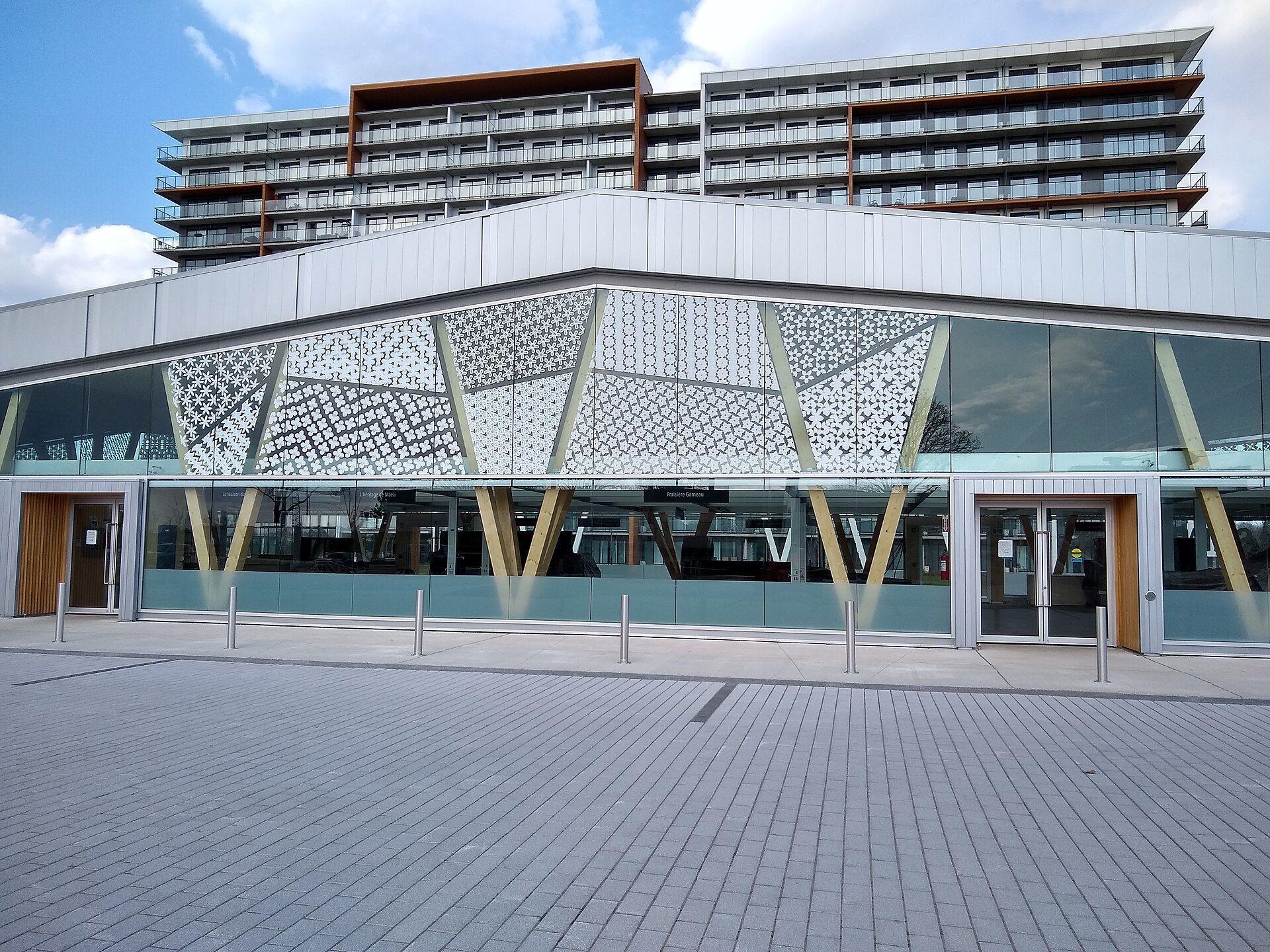
The Kitchener Market sits at 300 King Street East, Kitchener, Ontario N2G 2L3. Its own site lists a Saturday outdoor market from 7 a.m. to 2 p.m., with the indoor market building and Food Hall temporarily closed while the outdoor farmers' market continues to run. Those hours start early — seven in the morning is a genuine seven, and the best selection goes to people who treat it that way.
The closure is worth planning around rather than being surprised by. If your mental picture of this market is the indoor hall and a plate of food eaten upstairs, that is not the current visit. What is running is the outdoor market: produce, meat, baking, preserves and prepared food from vendors set up outside the building, on a Saturday-morning rhythm. Check the market's own site before travelling, since the status of the indoor space can change.
How does it compare to the St. Jacobs market?
People searching for the St. Jacobs market from Kitchener are usually looking for a different kind of day out, and this is the market in the region with the fullest published record. St. Jacobs Farmers' Market says it has welcomed visitors since April 1975. It opens Thursdays 8 a.m. to 3 p.m. and Saturdays 7 a.m. to 3:30 p.m. year-round, adding Tuesdays from June through August, and reports more than 300 vendors and roughly a million visitors a year.
That scale is the difference. St. Jacobs sits north of Waterloo, roughly a twenty-minute drive from downtown Kitchener, and it is a destination market — a wider mix of prepared food, crafts and vendors alongside the produce, and a visitor draw that extends well beyond the region. The Kitchener Market is the downtown, city-centre market: closer, smaller, easier to fold into a normal Saturday. Neither replaces the other, and plenty of Waterloo Region households use both.
What health rules govern Kitchener–Waterloo market vendors?
Food vendors in this region answer to Region of Waterloo Public Health. The Region is explicit that the Ministry of Health requires Public Health to inspect all food service businesses and investigate complaints, and it runs a separate stream of guidance supporting special event organizers and vendors in meeting provincial food safety regulations — the category most market and event vending falls into.
That is the Ontario pattern generally: food premises are inspected by local public health units rather than by the province directly, so the answer to “who do I ask?” changes when you cross a regional boundary.
Two practical consequences follow. For shoppers: the food you buy at a market stall is not outside the inspection system, and the Region publishes inspection results through its public “Check it! We inspect it.” search. For vendors: the requirements are set by provincial regulation and administered locally, so the correct first call is Region of Waterloo Public Health — before you book a stall, not after. Specific forms, fees and notice periods change, so take them from the Region directly rather than from another vendor's memory of last season.
What does Kitchener's wider local food landscape look like?
Markets are the part of a food system people can see. Food Web's Asset Map tracks the rest of it, and around Kitchener grocers make up the largest single share of what has been mapped, with producers, farms and other food businesses making up most of the balance.
Food Web map
Kitchener–Waterloo Farmers Markets
Grocers leading but not dominating means the balance is something else entirely: producers, farms and other food businesses that never appear on a grocery aisle. That is a useful corrective to the assumption that local food in a mid-sized Ontario city is either a supermarket or a Saturday stall. It also explains why a market is a poor census: the businesses that never take a stall are invisible to anyone counting tents. The Kitchener food map page keeps a live view of what has been recorded.
How that inventory gets built — and why municipalities increasingly want one — is a longer story. We have written about food asset mapping platforms and food system mapping software for municipal planning if you want the planner's version of this.
Are you a Kitchener-area food vendor outgrowing your market stall?

A stall has a ceiling, and most vendors hit it in the same way: a wholesale enquiry, a second market day, or a volume of prep that no longer fits a home kitchen. The answer is rarely more table space — it is licensed production space, booked by the hour so it stays a variable cost rather than a lease. You can rent a kitchen for a single production day a week, or browse licensed kitchens to see what is on the platform. There are no enabled Ontario listings on Food Web today, so local enquiries still do most of the work here.
Look wider than dedicated commissaries while you are searching. Restaurants with dark days, cafés that close in the afternoon, community halls, legion branches and church kitchens are all permitted spaces that sit unused for most of the week. In a city the size of Kitchener, one of those is almost always closer than the nearest purpose-built commissary.
Frequently asked questions
- What are the Kitchener Market hours?
- The market's own site lists a Saturday outdoor market from 7 a.m. to 2 p.m. at 300 King Street East, with the indoor market building and Food Hall temporarily closed. We could not corroborate that schedule from a second source, so check kitchenermarket.ca before travelling.
- Where do I park for the Kitchener Market?
- The market sits downtown at 300 King Street East, so parking uses the usual downtown Kitchener options rather than a dedicated market lot, and it is busiest mid-morning. Arriving closer to opening is the simplest way to avoid both the parking crunch and the thinned-out selection later in the day.
- What is the difference between the Kitchener Market and the St. Jacobs market?
- They are separate markets with different characters. The Kitchener Market is the downtown, city-centre market at 300 King Street East. St. Jacobs Farmers' Market is north of Waterloo, about a twenty-minute drive out, and has welcomed visitors since April 1975; it runs Thursdays 8 a.m. to 3 p.m. and Saturdays 7 a.m. to 3:30 p.m. year-round plus Tuesdays in summer, with more than 300 vendors.
- Who inspects food vendors at Kitchener-area markets?
- Region of Waterloo Public Health. The Ministry of Health requires Public Health to inspect food service businesses and investigate complaints, and the Region publishes separate guidance for special event organizers and vendors on meeting provincial food safety regulations. Inspection results are searchable through the Region's public portal.
- What do I need before I can sell food at a market in Waterloo Region?
- Start with Region of Waterloo Public Health rather than the market. Vendor requirements come from provincial food safety regulation and are administered locally, and they depend on what you are selling and whether you prepare it on site. Contact the Region for current forms, notice periods and requirements before you book a stall — approval is a prerequisite, not paperwork you catch up on afterwards.
Sources
- St. Jacobs Farmers' Market — St. Jacobs Market District
- Kitchener Market — Kitchener Market
- Health standards for business — Region of Waterloo Public Health
- About Farmers' Markets Ontario — Farmers' Markets Ontario
- Public health units — Government of Ontario

Written by
Justin Andrews
Kitchen access and local food infrastructure, Atlantic Canada
Justin Andrews is a chef-turned-founder who has spent the last decade working across farms, markets, restaurants, nonprofits, and academic research. He’s now the CEO of Food Web, a platform built to unlock underused commercial kitchens and strengthen local food systems. Justin writes about food, entrepreneurship, and the work of building resilient local economies.
Next step
See every food asset near you on one map
Commercial kitchens, farms, markets and processors, mapped and updated weekly.
No listing fees · 12% on completed bookings · Refunds inside the notice window